Weather Variability Reshapes Betting Patterns Across UK Flat Racing Meetings in Spring
Written by Petra Lorenz · Jul 2, 2026

Weather Variability Reshapes Betting Patterns Across UK Flat Racing Meetings in Spring
UK flat racing encounters its most changeable conditions during March through May when sudden showers alternate with bright spells and temperature swings that reshape ground conditions overnight. These shifts influence both race outcomes and the volume of bets placed on individual cards as punters respond to revised going reports and updated form assessments.
Spring Weather Dynamics and Track Conditions
Forecasters note that spring fronts often stall over Britain bringing localized downpours that turn good ground into soft or heavy within hours while adjacent tracks remain unaffected. Data from the Met Office shows average March rainfall varying by up to 40 millimetres between northern and southern fixtures in any given week and these differences alter the profile of each meeting. Trainers therefore monitor updates closely and late declarations frequently reflect revised assessments of which horses handle the revised surface.
Flat cards scheduled at courses such as Newmarket and Doncaster experience the sharpest swings because their open layouts offer little shelter from wind and rain. When morning inspections upgrade ground from good to good-to-soft the market responds within minutes as layers adjust prices on horses whose previous wins came on faster surfaces. This rapid recalibration produces measurable changes in total stakes handled by both on-course and remote operators.
Observed Shifts in Betting Volumes
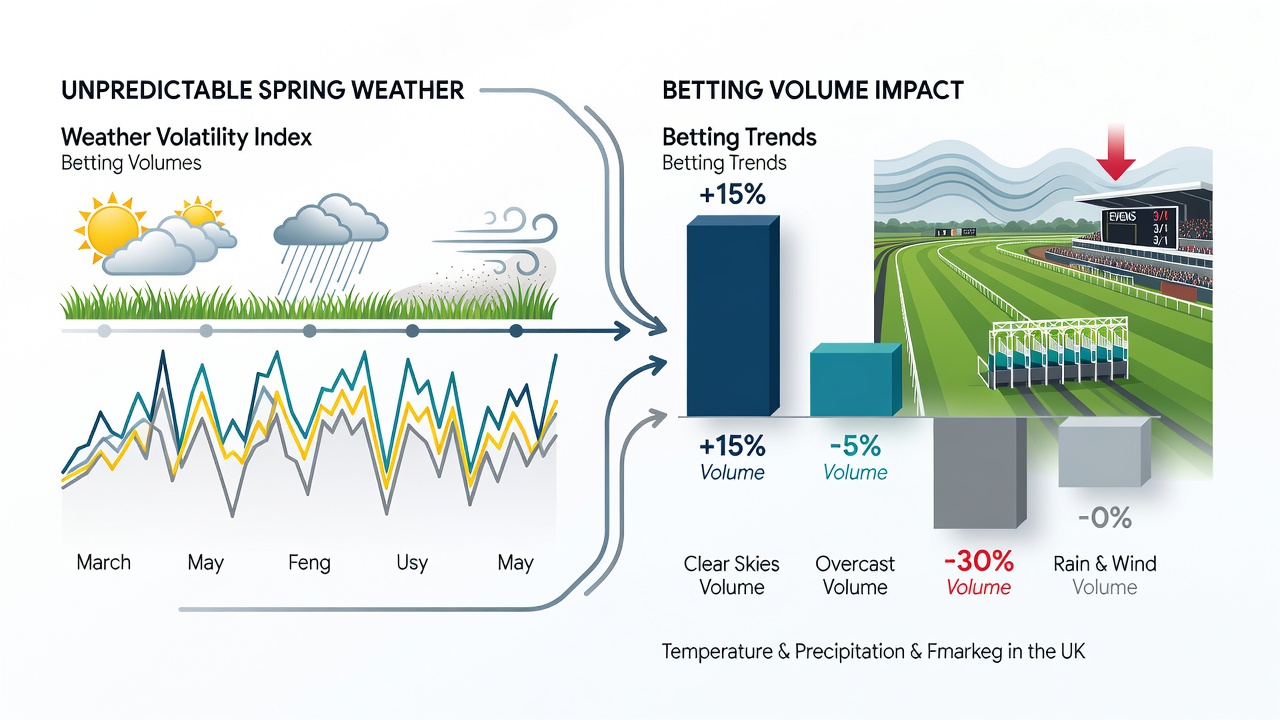
Industry figures reveal that total betting turnover on a typical April card drops between 12 and 18 percent when persistent rain arrives after a dry spell. Punters who had planned each-way bets on prominent favourites reduce stakes or switch to horses proven on softer ground while exchange markets show increased liquidity on lay selections. Researchers tracking Betfair data across three spring seasons recorded a 25 percent rise in matched volume on reverse forecasts whenever going reports changed within two hours of the first race.
Conversely dry sunny intervals following wet periods tend to compress the market toward shorter-priced runners. Volumes on longshots decline while accumulator bets incorporating multiple short-priced selections increase. One study covering 47 meetings between 2022 and 2024 found that each additional millimetre of overnight rain correlated with a 3.7 percent reduction in total stakes on the card although the effect diminished once the ground settled at a consistent description.
Regional and Temporal Patterns
Northern tracks such as Musselburgh and Hamilton often receive heavier rainfall than southern venues yet their smaller average fields mean percentage changes in betting volumes appear more pronounced. Southern circuits including Salisbury and Bath experience quicker drainage so that ground can return to good within a single day allowing operators to observe two distinct betting regimes on consecutive afternoons. Observers note that weekday cards suffer larger proportional drops than weekend fixtures because recreational punters adjust plans more readily when forecasts deteriorate.
Evening meetings add another variable because temperatures fall rapidly after sunset and any residual moisture can turn into a holding surface. Bookmakers report that pre-race liquidity on these cards is thinner and that late weather updates trigger sharper price movements than occur during daytime programmes. The pattern repeats each year and operators maintain dedicated teams to monitor Met Office alerts and issue revised odds boards accordingly.
Regulatory Context and Data Sources
International comparisons provide useful benchmarks. A Racing Australia report examining autumn weather impacts found similar volume reductions when tracks transitioned from firm to soft ratings. Meanwhile a North American study documented that sudden rain events increased place and show betting while decreasing win bets on speed-oriented runners. UK operators apply these insights when modelling spring liquidity forecasts and several firms now integrate real-time rainfall radar into their risk engines.
Conclusion
Spring weather therefore functions as an active variable that continuously reshapes both the composition of fields and the distribution of stakes across UK flat racing cards. Operators, punters and analysts track the same meteorological signals yet each group interprets the resulting volume shifts according to distinct priorities. Continued monitoring of these interactions supplies the data needed to anticipate how future seasons will respond when comparable conditions recur.