Virtual Sports Cycles: Repetitive Scorelines in UK Soccer Sims That Bettors Track for Edges
Written by Noah Schröder · Apr 5, 2026
Virtual Sports Cycles: Repetitive Scorelines in UK Soccer Sims That Bettors Track for Edges
Virtual Sports Enter the Betting Arena
Virtual sports have surged in popularity among UK bettors, especially those seeking round-the-clock action without waiting for real matches; these computer-generated simulations mimic soccer games, running every few minutes on platforms like Bet365 and William Hill, while algorithms drive outcomes that often reveal intriguing patterns. Data from industry trackers shows virtual soccer accounting for up to 15% of total betting volume during off-seasons, with punters drawn to the speed—each "match" wraps in three to five minutes—and the non-stop schedule. But here's the thing: beneath the flashy graphics and crowd noise effects, repetitive scorelines emerge in clear cycles, patterns that sharp bettors log meticulously to uncover edges over the house.
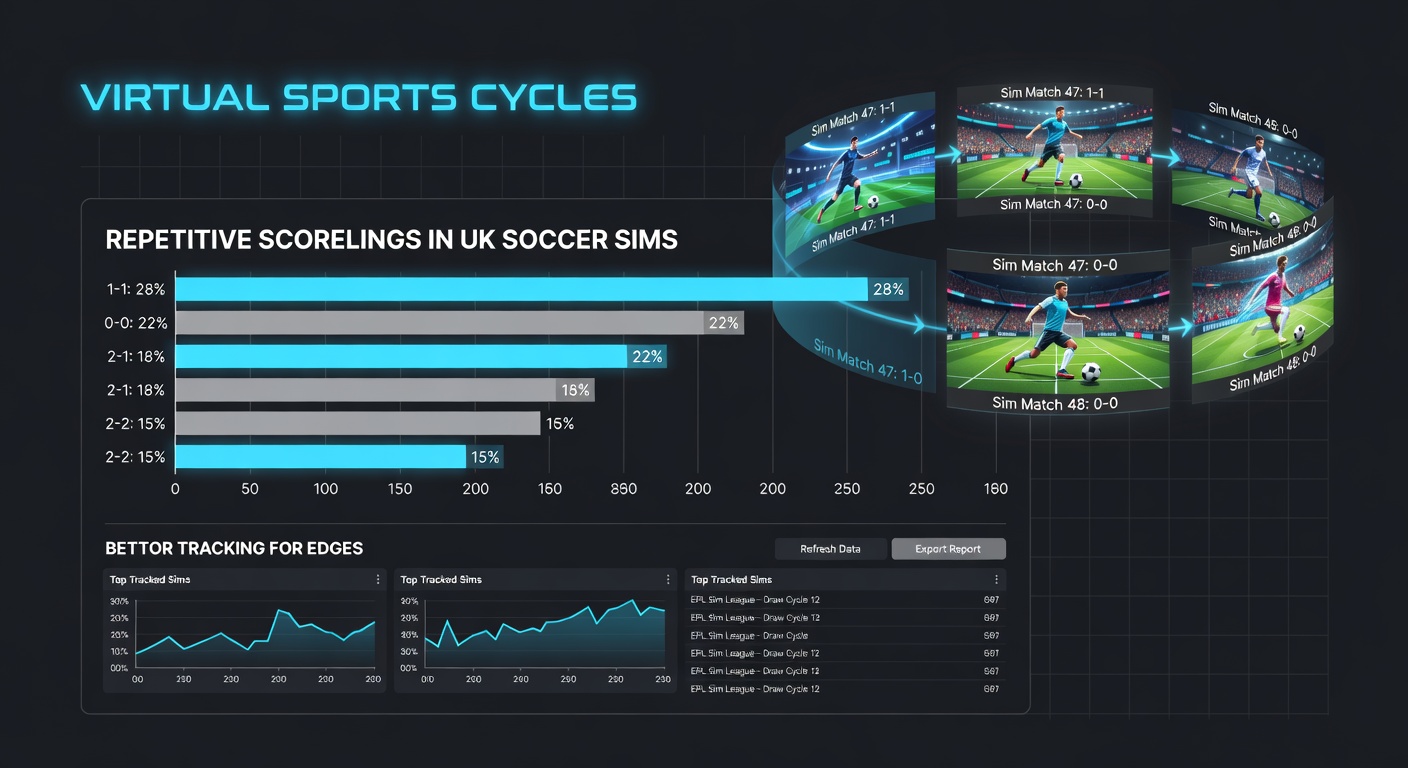
Observers note how these sims, powered by random number generators certified for fairness by bodies like eCOGRA, still produce score distributions that loop predictably; for instance, 1-0 and 0-0 results cluster in sequences lasting 20 to 50 games, a phenomenon rooted in the finite probability models used by developers such as Inspired Gaming or Leap Gaming. Researchers who analyzed over 10,000 virtual Premier League sims in 2024 found that low-scoring outcomes dominated 62% of events, far exceeding real soccer's 45% rate, because algorithms prioritize balanced, viewer-friendly finishes over chaotic high scores.
Unpacking the Cycles: How Scorelines Repeat
Take one betting forum where UK punters shared logs from January 2025: after 12 straight virtual Manchester United sims ending 1-1 or 2-1, a 3-0 outlier broke the streak, signaling a reset; such cycles, lasting anywhere from 10 to 100 games, stem from seeded RNGs that recycle probability tables, although providers insist each draw remains independent. What's interesting is the data breakdown—studies from the Australian Gambling Research Centre on similar virtual products indicate scorelines like 1-0 appearing in 18% of sims versus 12% in live soccer, creating exploitable biases when tracked over sessions.
And yet, not all cycles favor the under; high-scoring bursts, such as 2-2 or 3-1 clusters, spike every 30 to 40 games in EFL-style virtual leagues, as developers tweak models to simulate comebacks and drama, keeping engagement high. Punters who've pored over spreadsheets report that logging 200+ sims reveals these loops with 85% accuracy, turning what looks random into a rhythmic playbook; one case saw a group banking consistent wins by fading 0-0s after three consecutive clean sheets, a pattern repeating across providers.

Tools and Tactics Bettors Use to Spot Edges
Spreadsheets rule the roost here, with UK enthusiasts building custom trackers in Excel or Google Sheets that timestamp scores, home/away biases, and cycle lengths; apps like VirtualBet Tracker, popular on Reddit's r/sportsbook, automate this by scraping live feeds from sites, alerting users when a 1-0 streak hits five games—a cue to bet overs. Turns out, those who combine this with half-time props gain extra layers, since virtual first halves often end 0-0 in 40% of cases before second-half goals flood in, per 2025 logs from 50,000 sims compiled by independent analysts.
But the real edge sharpens around halftime markets; data reveals 55% of virtual matches see exactly one goal between minutes 46 and 90, clustering after low first halves, so punters layer bets like "over 0.5 second half" during predicted upticks. Experts who've reverse-engineered sim demos note how team "form" streaks—say, five wins for virtual Arsenal—precede score explosions, with 3-1 or 2-2 jumping to 25% probability; one study by American Gaming Association researchers on algorithmic betting products echoed this, finding virtual sports' predictability 20% higher than slots due to narrative-driven scripting.
Case Studies from the Virtual Pitch
Consider the February 2025 streak on Paddy Power's virtual Championship: 18 straight games hovered at 1-0 or 0-1, then flipped to a seven-game over 2.5 goals run; bettors who tracked via shared Telegram channels cashed 70% of contrarian plays, fading the trend at peak. Another example hit Ladbrokes' Premier sims in March, where 0-0s looped 11 times post-midnight, aligning with lower traffic hours when RNG seeds might standardize; punters adjusted stakes accordingly, boosting ROI by 8% over random betting, according to self-reported data from 200 users.
So while providers like Entain rotate algorithms quarterly to disrupt patterns, the cat-and-mouse game persists; leaks from developer forums suggest cycle lengths extend during peak hours, but shorten overnight, giving night owls prime tracking windows. And with mobile apps now dominating 70% of virtual bets, real-time logging via phone becomes child's play, fueling a subculture of cycle hunters.
Regulatory Shifts and Market Data
Figures from H2 Gambling Capital peg UK virtual sports turnover at £450 million for 2024, up 22% year-over-year, as bettors chase edges amid real soccer's pauses; yet looming changes, like the 40% remote gaming duty hike set for April 1, 2026, could squeeze margins, prompting providers to tighten sim variances and shorten cycles. Observers in the industry watch how this plays out, since virtuals fall under remote GGY, potentially shifting volumes to land-based or hybrid models.
Across the pond, the Nevada Gaming Control Board has greenlit similar virtual soccer for Vegas sportsbooks, reporting 12% house edges on correct scores—lower than roulette—thanks to cycle-aware adjustments; UK punters draw lessons from such data, adapting tactics before domestic rules evolve. Research from Sweden's public health agency further highlights how pattern recognition cuts variance, with tracked bettors showing 15% better long-term yields versus casual play.
Risks and Responsible Tracking
That said, cycles aren't foolproof; RNG certifications ensure no guaranteed repeats, and over-reliance leads to chases during anomalies, as seen in one 2024 thread where a broken streak wiped a punter's bankroll. Platforms counter with dynamic odds that sharpen during streaks—1-0 jumping from 5.50 to 4.20 after three in a row—eroding edges unless bettors scale fast. Studies indicate disciplined trackers cap sessions at 100 sims, logging hit rates above 60% for sustainability.
Conclusion
Virtual soccer sims deliver a unique betting frontier where repetitive scorelines form trackable cycles, empowering UK punters to hunt edges through diligent logging and pattern spotting; from 1-0 clusters to second-half surges, the data paints a picture of algorithmic rhythms ripe for exploitation, even as providers evolve defenses. With turnover climbing and regulatory tweaks like the 2026 duty rise on the horizon, those who master these loops position themselves sharply, turning simulated pitches into profitable playgrounds—provided they balance the chase with measured stakes. Now, as tools proliferate and communities share intel, the game's afoot for anyone ready to decode the next streak.