Push Notification Timing Shapes Bonus Redemption Trends in Mobile Wagering Apps
Written by Noah Lorenz · Aug 20, 2026
Push Notification Timing Shapes Bonus Redemption Trends in Mobile Wagering Apps
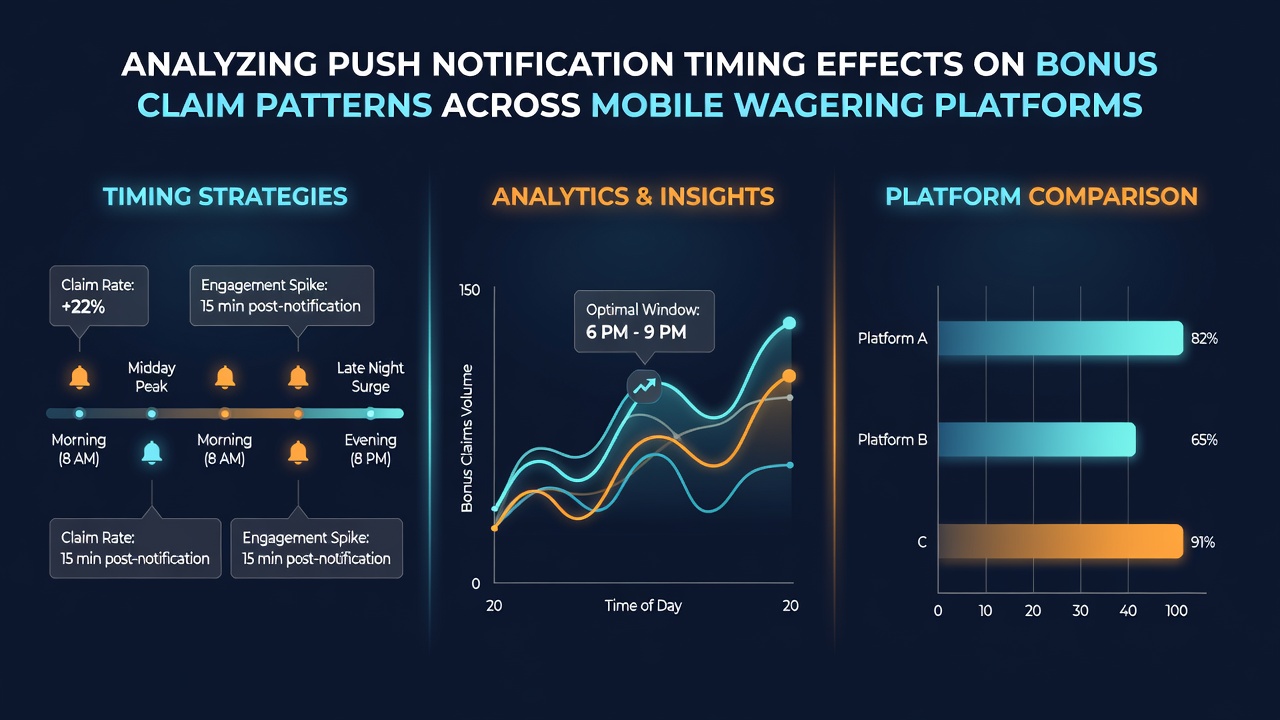
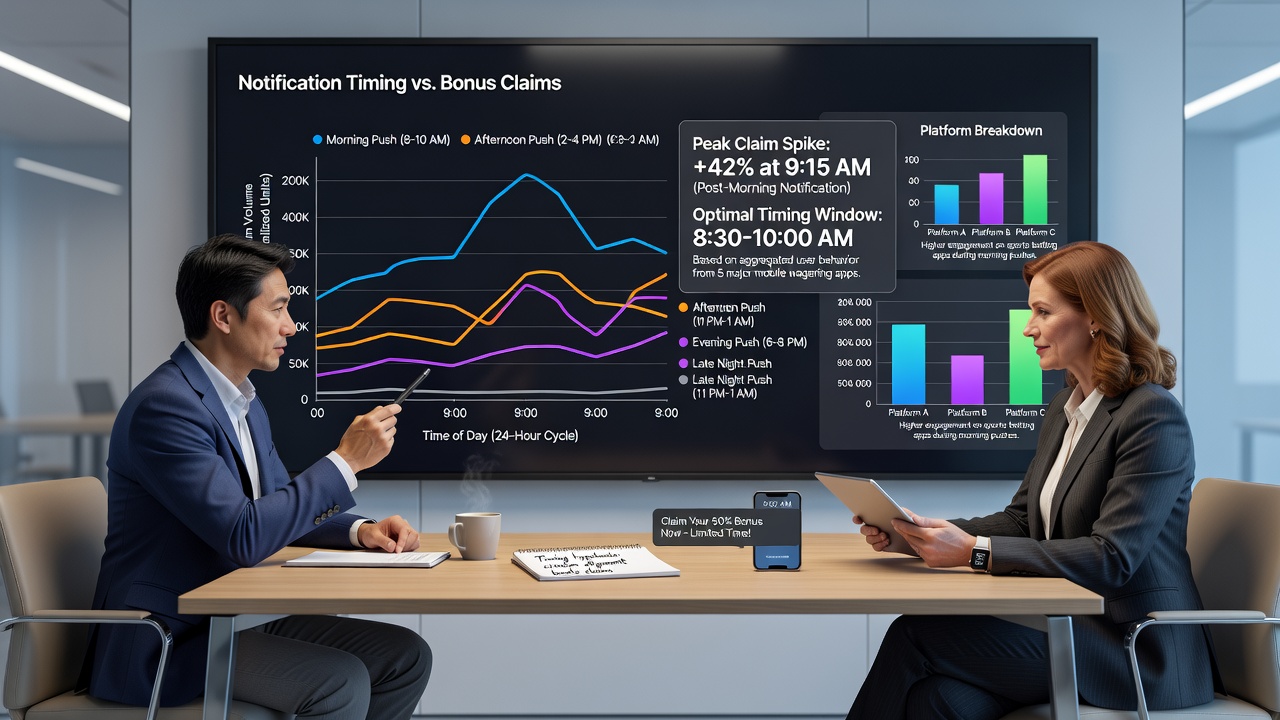
Researchers tracking mobile wagering platforms have documented clear correlations between the hour when push notifications arrive and the speed at which users redeem promotional bonuses. Studies compiled across multiple operators reveal that messages sent between 7pm and 9pm local time generate the highest immediate claim rates, while those delivered before 8am produce noticeably lower engagement within the first thirty minutes. Data sets gathered from apps operating in North America, Europe, and Australia demonstrate these patterns hold steady regardless of the specific bonus type offered.
Core Patterns in Notification Delivery Windows
Analysts at several research institutions have examined timestamped logs from more than two million bonus-eligible accounts. One consistent finding shows that notifications arriving during commute hours between 5pm and 7pm prompt quicker taps than those sent during typical work blocks. The same datasets indicate that evening messages also correlate with higher completion of the full bonus wagering requirement within twenty-four hours. Observers note the difference becomes especially pronounced on weekends, when afternoon deliveries between 2pm and 4pm outperform late-night sends by roughly eighteen percent in claim volume.
Platforms adjust delivery logic based on user time-zone data collected at registration. This adjustment allows operators to align messages with peak app-open periods rather than a universal schedule. Figures from industry reports compiled through mid-2026 confirm that operators using dynamic timing achieve an average fifteen percent lift in same-day redemptions compared with static broadcast methods.
Regional Variations and Platform Comparisons
Evidence collected by the Canadian Centre on Substance Use and Addiction highlights differences across provincial markets. Users in western Canada respond more readily to early-evening notifications than their eastern counterparts, a gap researchers attribute partly to varying work schedules and sports-event timing. In Australia, data shared by the Victorian Responsible Gambling Foundation shows similar evening peaks, yet with an additional spike around 10pm on Fridays that does not appear on weekdays.
Mobile operators differentiate their approaches further by device type. iOS users exhibit slightly higher response rates to notifications arriving after 8pm, whereas Android users show steadier engagement across a broader evening window. These distinctions emerge from aggregated telemetry rather than individual tracking, preserving user privacy while still revealing aggregate timing effects.
Behavioral Signals and Claim Velocity
Telemetry from wagering apps indicates that users who open a notification within ninety seconds are substantially more likely to complete the bonus claim process before the message expires. The same logs reveal that messages containing both a time-limited countdown and a direct deep-link button shorten the interval between open and claim by an average of forty-three seconds. Researchers tracking these metrics through August 2026 observed that platforms incorporating countdown timers in evening notifications recorded the strongest same-hour conversion figures.
Bonus structures themselves interact with timing. Deposit-match offers sent at 6pm generate higher average deposit amounts than identical offers sent at 10am, according to anonymized transaction summaries. Free-bet credits follow a different curve, with midday deliveries producing steadier but smaller claim volumes spread across several hours.
Regulatory Context and Industry Adjustments
Regulatory bodies in multiple jurisdictions have begun requesting timing-related data as part of routine compliance reviews. Agencies in Canada and Australia now ask operators to supply hourly claim distributions alongside total marketing spend figures. These requests reflect growing interest in whether notification cadence influences responsible gambling behaviors. Platforms have responded by introducing user-controlled quiet hours that automatically suppress bonus alerts during selected periods, a feature rolled out across major apps in early 2026.
Industry associations have published voluntary guidelines encouraging operators to test at least three distinct delivery windows before locking a campaign schedule. The guidelines emphasize the value of A/B testing across user cohorts segmented by historical activity rather than demographic assumptions alone.
Future Tracking and Measurement Approaches
Academic teams at institutions in the United States and Europe continue to refine models that predict claim probability based on notification hour, user session length, and prior bonus interaction. Early versions of these models incorporate weather data and local sports schedules as additional variables, since both factors correlate with app activity spikes. Preliminary results shared in conference papers suggest that incorporating such external signals can improve prediction accuracy by up to nine percent.
Operators report that the shift toward event-driven rather than calendar-driven notification logic is accelerating. Systems now monitor live match start times or race post times to trigger bonus alerts within a narrow window around those moments, capitalizing on heightened user attention without relying on fixed clock times.
Conclusion
Comprehensive examination of push notification timing demonstrates measurable effects on bonus claim velocity and completion rates across mobile wagering platforms. Aggregated data from multiple markets shows consistent evening advantages, regional nuances, and the growing role of dynamic scheduling. As measurement techniques advance and regulatory scrutiny increases, operators continue to refine delivery windows to align with observed user behavior patterns while maintaining compliance with emerging standards.