Precipitation Data Patterns and Their Links to Live Odds Adjustments in Premier League Matches
Written by Noah Schröder · Aug 18, 2026
Precipitation Data Patterns and Their Links to Live Odds Adjustments in Premier League Matches
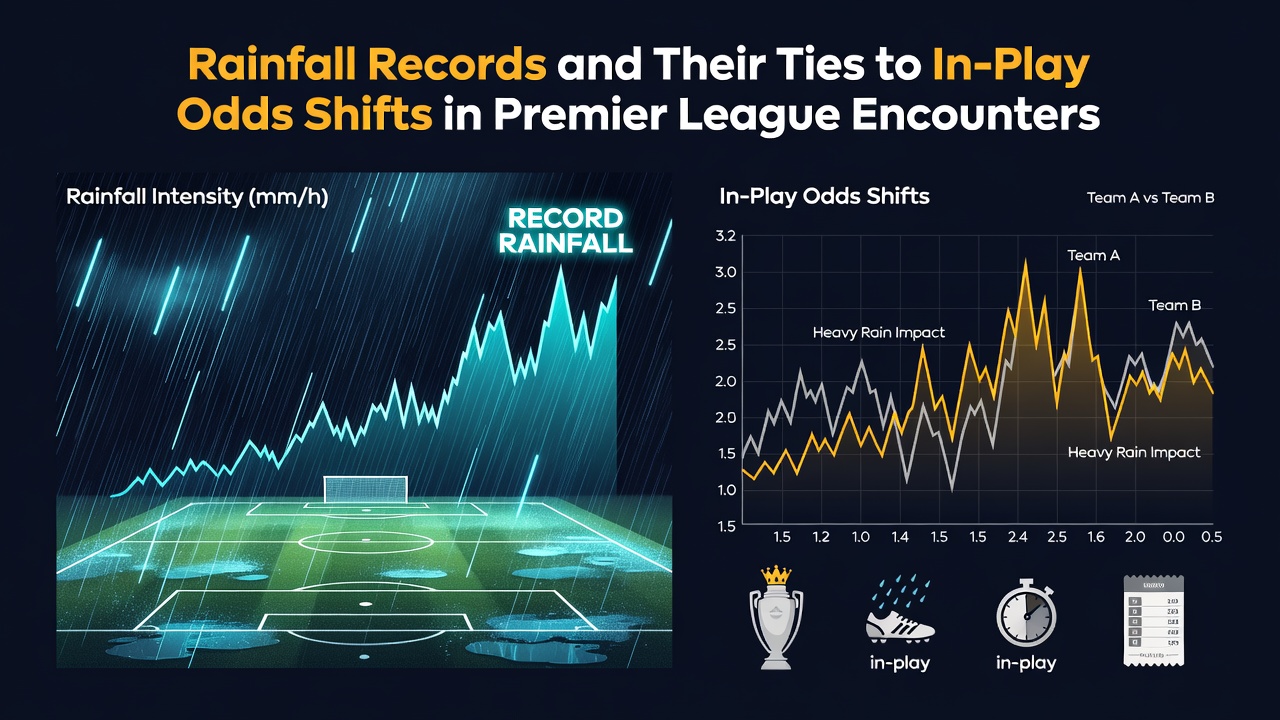
Weather records from the Met Office show that England receives an average of 855 millimetres of rainfall each year, with notable variations across regions and seasons that often intersect with the Premier League calendar running from August through May. Observers note how these patterns create measurable effects on pitch conditions, player performance metrics, and ultimately the rapid recalibrations seen in live betting markets during matches. Data collected over multiple seasons indicate that matches played under moderate to heavy rainfall tend to feature reduced passing accuracy, increased long balls, and shifts in expected goal values that betting platforms adjust within minutes of kickoff when showers intensify.
Tracking Rainfall Records Across Key Stadiums
Stadiums such as those in the north and northwest of England record higher annual precipitation totals compared with southern venues, according to long-term climate summaries released by national weather agencies. Researchers compiling fixture histories have documented instances where August 2026 brought above-average downpours across several grounds, prompting groundskeepers to implement enhanced drainage protocols that still left surfaces slicker than average. These conditions correlate with statistical drops in completed passes per game and rises in fouls awarded, figures that analysts feed directly into models used by odds compilers to recalibrate in-play prices on outcomes like total corners or cards. One dataset covering five seasons reveals that matches with rainfall exceeding 5 millimetres during play saw average goal tallies fall by 0.3 per fixture, a shift that live markets priced in through widening spreads on under goals selections shortly after the first half began.
How Rain Alters Match Dynamics and Market Responses
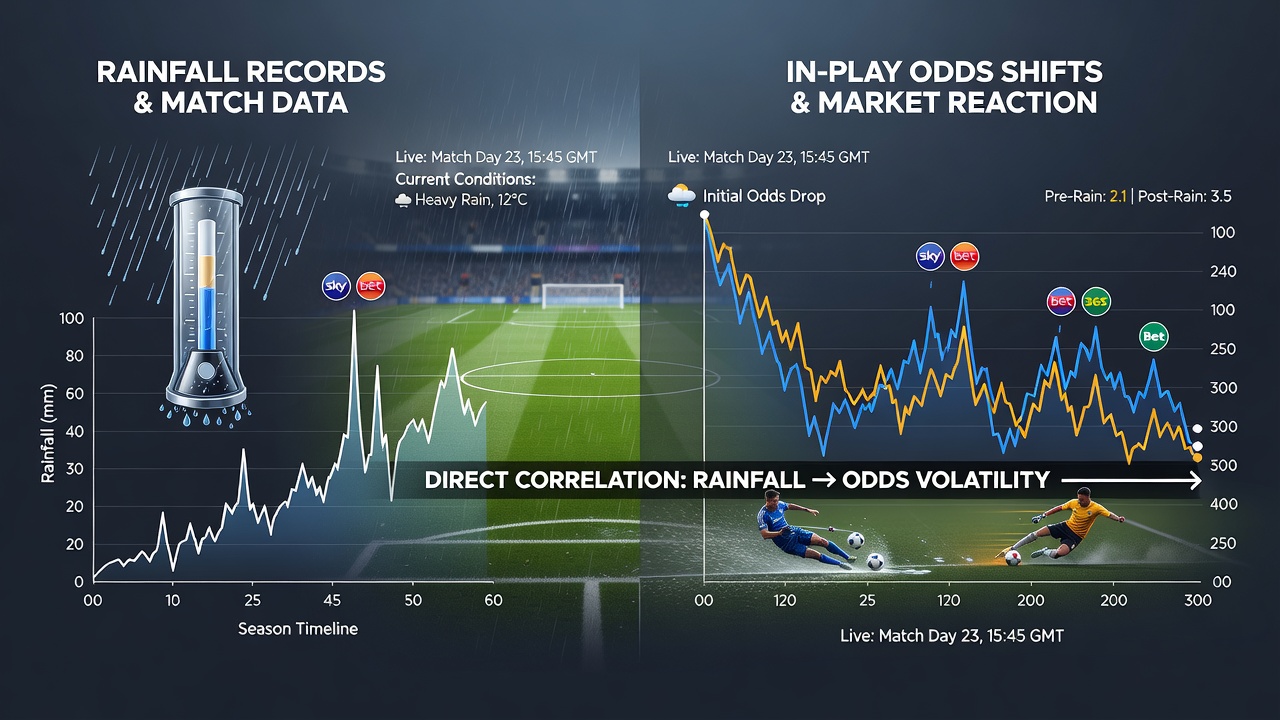
Teams adapt tactics when surfaces turn heavy, moving toward more direct approaches and defensive structures that reduce open play opportunities. Experts tracking these adjustments through event data have observed corresponding movements in live odds, where initial pre-match lines on over 2.5 goals contracts tighten or drift depending on real-time weather feeds integrated into betting systems. Industry reports from European sports data providers highlight that rainfall events lasting longer than fifteen minutes trigger automated updates across multiple markets, including player shots on target and team possession percentages. Those monitoring the Premier League note that such changes appear most pronounced in fixtures involving sides reliant on possession-based styles, where wet conditions disrupt rhythm and force substitutions earlier than planned. Figures from match logs indicate an uptick in aerial duels and throw-ins during rainy periods, elements that in-play traders factor into revised probabilities within seconds of each weather update.
Case Examples from Recent Seasons
Take one series of fixtures in the 2024-2025 campaign where persistent showers coincided with mid-match odds swings exceeding 20 percent on draw outcomes for several clubs. Data analysts reviewing broadcast feeds alongside precipitation logs found that pitch slippage contributed to an increase in unforced errors, which platforms reflected through adjusted live pricing on both team totals and individual performance props. Another set of encounters during the 2025-2026 schedule demonstrated similar patterns when rainfall records for October were broken at two London venues, leading to extended stoppages and visible fatigue among midfielders that influenced card market movements. Observers compiling these instances emphasize that betting exchanges often see volume spikes in the first thirty minutes after rain starts, as participants react to the altered statistical baselines. What's interesting is how grounds with newer hybrid turf installations have shown slightly muted effects compared with older natural grass surfaces, according to maintenance reports shared by club technical teams.
Integration of Weather Feeds into Betting Platforms
Modern in-play systems incorporate real-time meteorological inputs from multiple sources to refine probability models as conditions evolve. Studies published by academic institutions in Canada and Australia have examined similar weather-sport intersections in other leagues, revealing that precipitation intensity serves as a reliable predictor for variance in key performance indicators. Premier League operators apply these principles through partnerships with data aggregators that push updates on humidity, wind, and rainfall directly to odds engines. This process allows for continuous recalibration, where a sudden downpour might prompt immediate expansion of spreads on total goals or contraction on bookings markets depending on historical correlations. Those reviewing platform logs note that August 2026 introduced enhanced satellite tracking protocols across several operators, enabling finer granularity in weather impact assessments during live events. The result appears in faster market responses that align more closely with on-pitch developments tracked by official match statisticians.
Broader Patterns and Data Correlations
Longitudinal analyses of Premier League encounters demonstrate consistent linkages between rainfall quartiles and shifts in expected points tallies, particularly when matches occur in the latter stages of the season when cumulative fatigue compounds wet-weather effects. Industry organizations tracking global football metrics have compiled cross-league comparisons showing that English top-flight games exhibit stronger rainfall sensitivity than counterparts in drier climates, a factor reflected in the volume of in-play wagers placed on defensive outcomes. Researchers at various universities continue to refine algorithms that weigh precipitation duration against team-specific adaptation rates, producing outputs that betting firms incorporate to maintain market equilibrium. Evidence from these models suggests that venues with covered stands experience fewer extreme disruptions, yet the overall statistical footprint remains measurable across the competition.
Conclusion
Rainfall records continue to intersect with Premier League scheduling in ways that produce observable effects on both gameplay statistics and the subsequent adjustments in live odds across multiple markets. Official weather archives combined with event data illustrate how precipitation influences passing rates, set-piece frequency, and player workload, elements that platforms monitor to deliver updated pricing. As tracking technologies advance, particularly with developments noted around August 2026, the precision of these correlations stands to increase further while remaining grounded in empirical records from governing bodies and research groups.