Northern Race Venues Deploy Advanced Sensors to Refine Live Betting Markets
Written by Petra Lorenz · Jun 4, 2026
Northern Race Venues Deploy Advanced Sensors to Refine Live Betting Markets
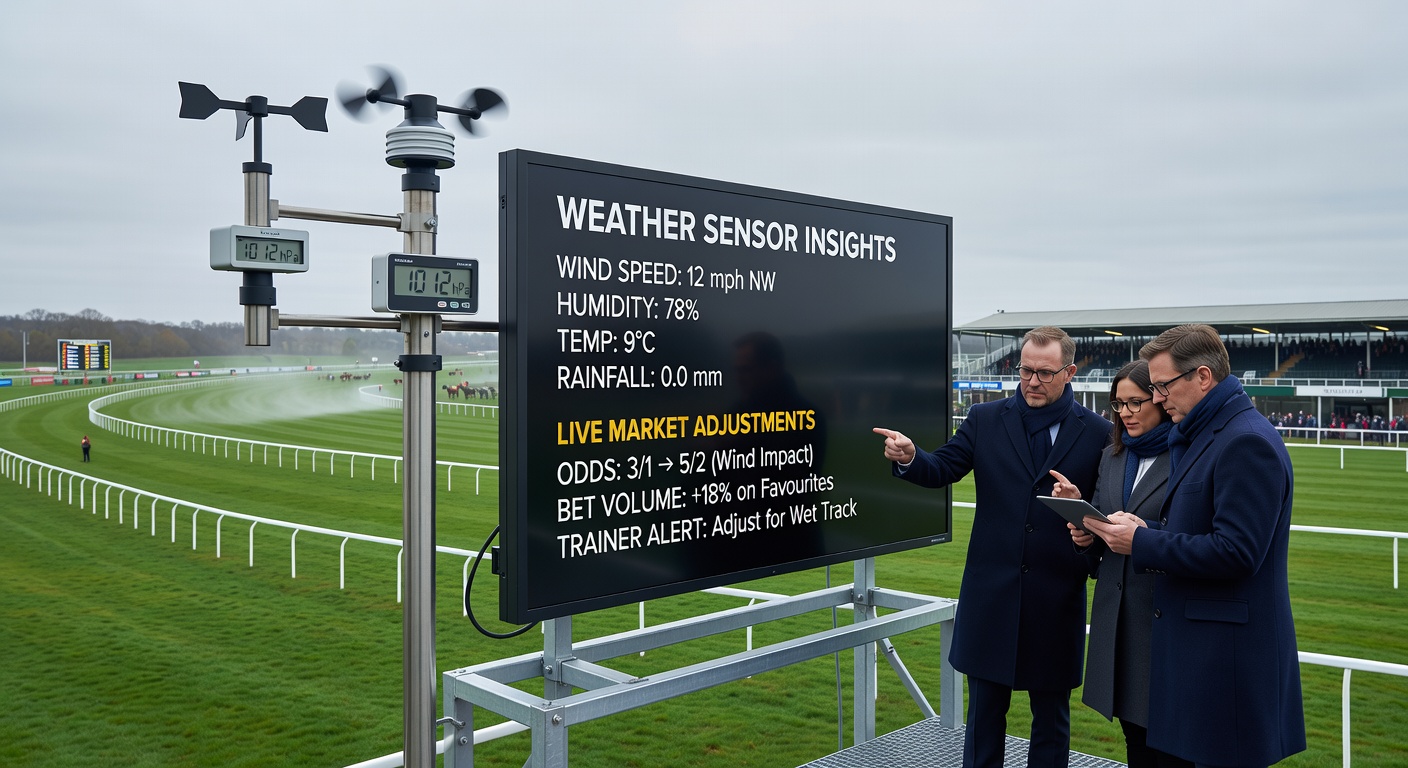
Northern racecourses across Britain have integrated networks of weather sensors that feed continuous data into betting platforms, allowing operators to recalibrate odds during meetings when precipitation or temperature shifts alter track conditions. These installations capture rainfall totals, soil moisture levels, wind speeds, and air temperatures at multiple points around each circuit, then transmit readings every few minutes to central systems used by bookmakers and data providers.
Technology Behind the Data Streams
Facilities such as those in Cumbria, Scotland, and the north of England began rolling out denser sensor arrays in 2024, with upgrades continuing through spring 2026 ahead of the summer jump and flat seasons. Each unit combines tipping-bucket rain gauges, capacitive soil probes, and ultrasonic anemometers linked to solar-powered transmitters that send packets over dedicated radio frequencies. Aggregated readings reach trading desks within seconds, where algorithms compare current values against historical benchmarks for that specific venue and meeting type.
Operators note that a sudden spike in recorded rainfall over a 15-minute window often triggers immediate recalculations for races scheduled later on the card. Ground staff cross-reference the sensor output with manual inspections before confirming going descriptions, yet the automated feeds allow markets to move in advance of official announcements.
Impact on Live Market Dynamics
Live odds on individual runners adjust when data indicates that softer ground will favour horses with proven stamina or particular hoof types. Trainers and analysts who monitor the same public feeds observe patterns where certain stables excel once moisture content exceeds a threshold recorded at 12 percent above seasonal averages. Bookmakers incorporate these tendencies into pricing engines that widen or tighten spreads on the fly, especially in handicap contests where margins remain tight.
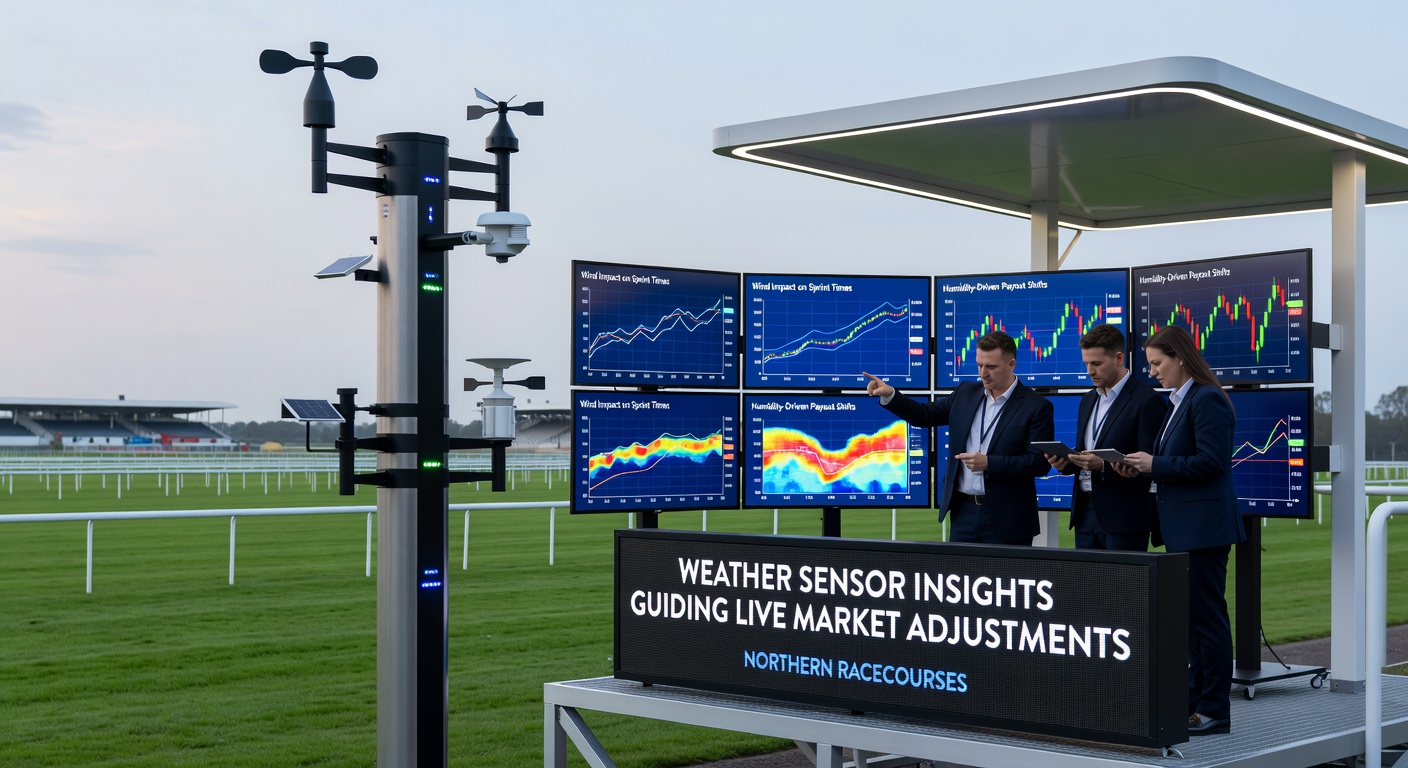
During the June 2026 fixtures at several northern tracks, prolonged light rain recorded across successive sensor clusters coincided with measurable shifts in market liquidity for later races. Participants who track these updates report that odds on mud-loving stayers shortened within minutes of the data crossing predefined thresholds, while speed-oriented runners lengthened correspondingly. The process operates continuously rather than at discrete intervals, creating a rolling series of micro-adjustments that reflect the evolving state of the surface.
Integration with Broader Forecasting Systems
Racecourse operators link local sensor networks to regional meteorological models supplied by the European Centre for Medium-Range Weather Forecasts, allowing short-term predictions of how conditions might develop over the next two or three hours. When forecasts and on-site readings align, trading teams receive higher-confidence signals that support larger position adjustments. Discrepancies between the two sources prompt additional manual checks before markets commit to revised prices.
Industry reports from the Association of Racing Operators highlight that venues equipped with these systems experience fewer disputes over going descriptions because objective measurements underpin every change. The same data sets also support post-meeting analysis used by handicappers and form students who compile long-term databases of performance relative to recorded moisture and temperature values.
Regional Variations Across Northern Circuits
Tracks situated in higher rainfall zones maintain denser sensor grids than those on freer-draining soils, reflecting the greater variability experienced at exposed northern locations. Carlisle and similar Cumbrian venues, for instance, record readings from eight separate points around the circuit, whereas some flatter Scottish courses operate with five. This distribution ensures that localised showers do not skew overall assessments of the racing surface.
Data compiled over multiple seasons shows that races run after cumulative rainfall above 8 millimetres in the preceding four hours produce different average winning times compared with drier conditions at the same distance. Market makers embed these historical relationships into their models, so live prices begin to reflect the statistical edge before the race is declared off.
Future Developments and Data Sharing
Plans announced for 2027 include expanding sensor coverage to include subsurface temperature probes that track how deeply moisture penetrates the turf layer. Developers expect these additions will further refine predictions of how quickly a surface will recover after heavy rain, information that directly influences the timing of market movements. Several northern racecourses have also begun publishing anonymised sensor archives for academic researchers studying turf management and equine performance under variable weather.
According to the World Meteorological Organization, standardised data protocols now used at these venues align with international best practices for automated weather observation, improving compatibility with external forecasting services. This alignment supports more consistent integration between racecourse feeds and the wider meteorological community.
Conclusion
Weather sensor networks at northern racecourses supply continuous, location-specific measurements that enable precise, real-time recalibration of live betting markets. The combination of on-site instrumentation, regional model inputs, and historical performance correlations creates a feedback loop where ground condition changes translate directly into adjusted odds for upcoming races. As installations expand and data resolution improves, the same infrastructure continues to underpin both operational decisions at the track and pricing strategies employed by betting platforms.