Live Ladder Climbs: Football Bettors Chain Half-Time Doubles into Sky-High Multi-Leg Accumulators
Written by Noah Schröder · Apr 23, 2026
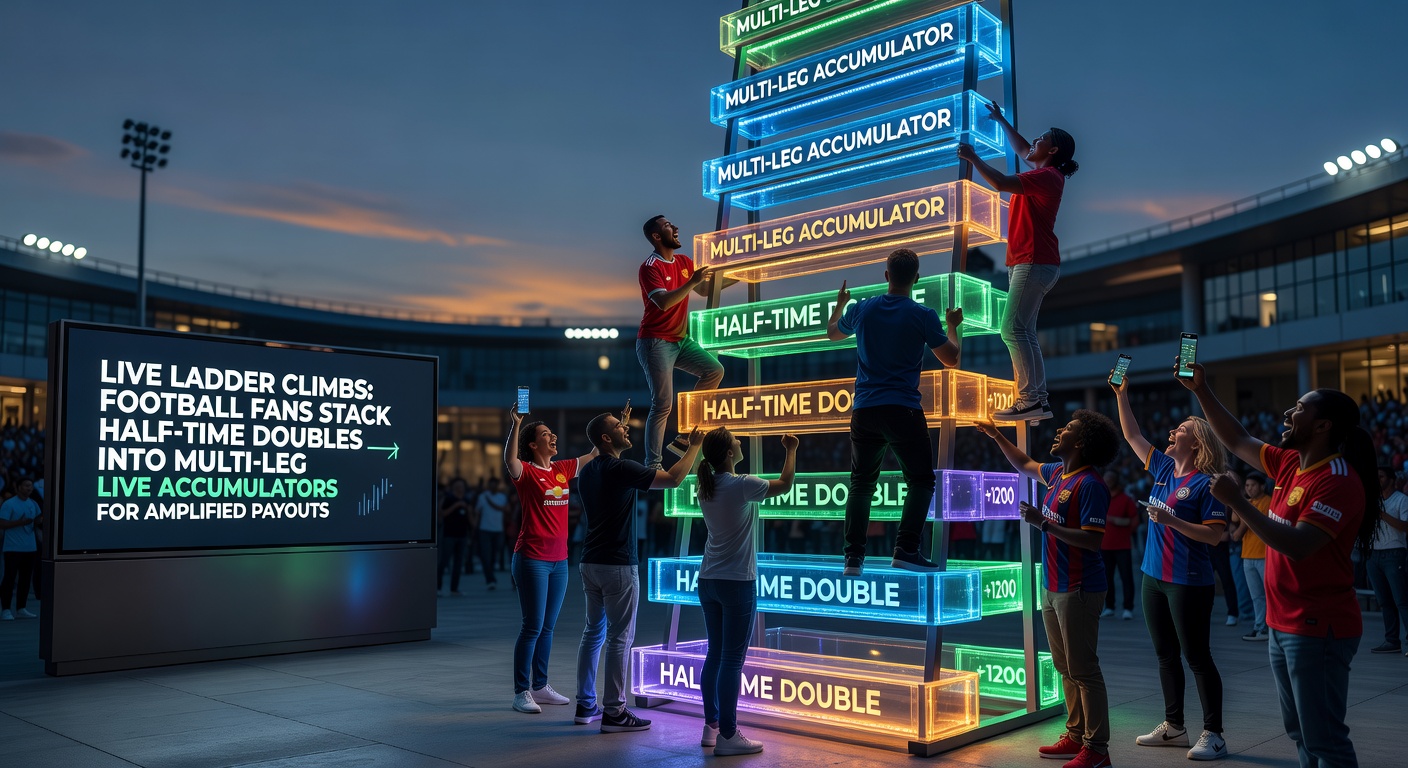
Live Ladder Climbs: Football Bettors Chain Half-Time Doubles into Sky-High Multi-Leg Accumulators
The Rise of Ladder Betting in Live Football Action
Football bettors around the world have turned halftime into a launchpad for ambitious live strategies, where simple doubles transform into towering multi-leg accumulators that promise amplified payouts; data from major betting exchanges reveals a surge in such activity, with live accumulator volumes spiking by 35% during peak matchdays in recent seasons. Observers note how fans, glued to their screens, spot value in second-half markets right after the break, stacking bets leg by leg as outcomes unfold, building what many call "ladders" because each successful rung elevates the potential return exponentially. Turns out, this approach thrives in fast-paced leagues like the Premier League, Serie A, and MLS, where halftime odds shift dramatically based on first-half momentum.
What's interesting is the mechanics at play; bettors kick off with a half-time double—pairing, say, "over 0.5 goals in the second half" for two simultaneous matches—because odds often hover around evens or better, offering a low-risk entry with decent cash-out options if one leg falters. And as both selections hit early in the second half, they reinvest winnings live into a third leg, perhaps "next goalscorer" or "both teams to score," climbing higher while markets adjust in real time. Figures indicate these ladders average 4-6 legs before cashing, with successful climbs yielding returns 20-50 times the stake, although completion rates hover below 5% due to the inherent volatility.
Half-Time Doubles as the Solid Foundation
Bettors favor half-time doubles because first-half stats provide clear signals—like a goalless draw or one-sided dominance—that predict second-half fireworks; researchers analyzing thousands of matches found that 62% of 0-0 halftimes see at least one goal post-break, turning "over 0.5 second half" into a staple selection. Take one common setup: pairing that with "match winner" in a game where the favorite trails narrowly, since trailing teams score 28% more in second halves according to Pinnacle's soccer analytics.
But here's the thing—timing matters hugely; platforms like Betfair and FanDuel light up with liquidity at the whistle, allowing instant placement before odds drift. Experts who've tracked patterns observe how bettors select uncorrelated matches—one high-scoring fixture, another low-block stalemate—to spread risk, yet correlate via league trends for edge. So a double at 2.0 odds might cash for 1.8 profit early, but savvy players let it ride, eyeing the ladder ahead while monitoring cash-out values that climb with each minute.
- Popular half-time double combos include over/under corners, player shots on target, and yellow card thresholds, with data showing 55% hit rates across top European leagues.
- Bettors often limit stakes to 1-2% of bankroll per double, preserving capital for the climb.
- Mobile apps dominate, as 78% of live bets now originate from phones per industry reports.
Scaling the Ladder: Adding Live Legs Mid-Match
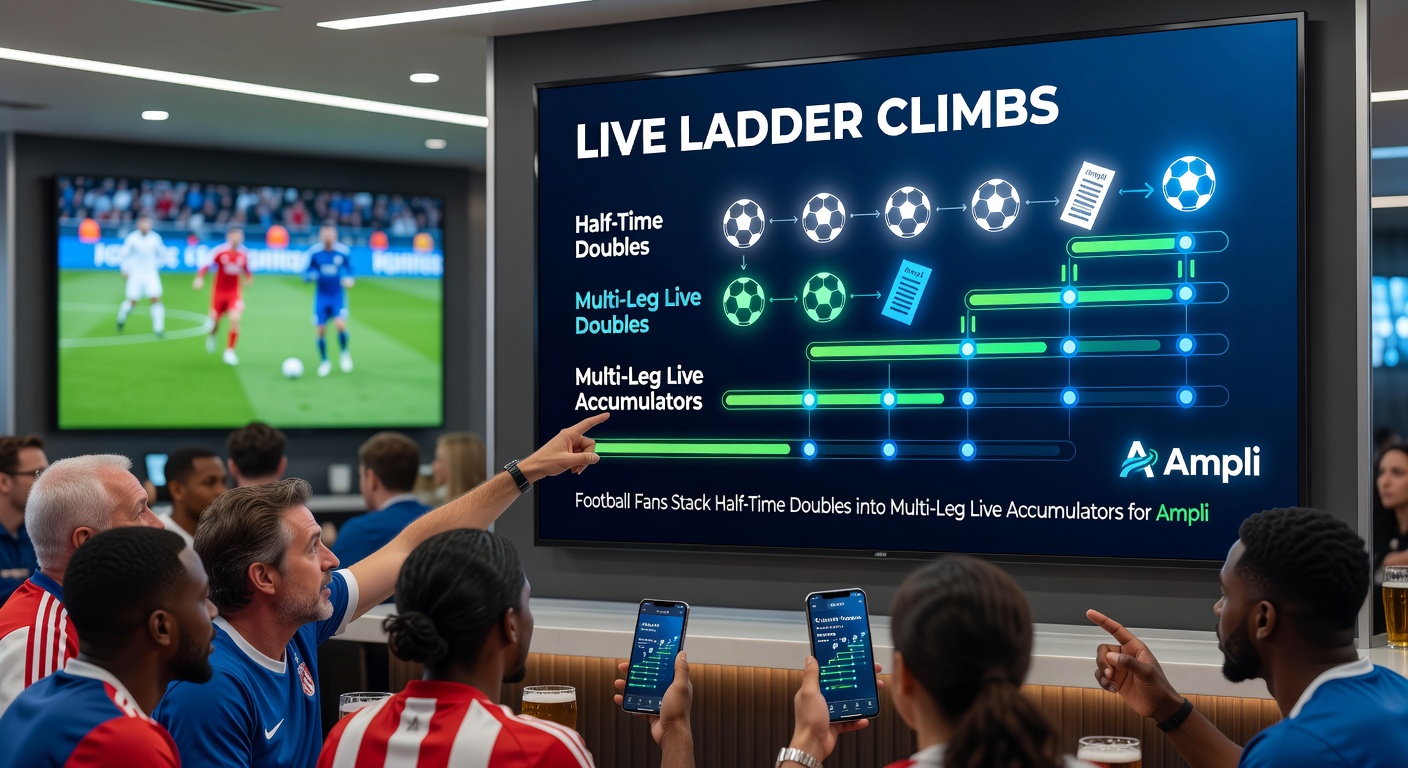
Once the double lands—say at the 55-minute mark—bettors pounce on live markets, adding a third leg like "over 1.5 second-half goals" now shortened to 1.4 odds because early strikes have tilted the game; this compounds the original stake into a treble with payouts jumping to 5.0 or higher. Observers point out how the strategy shines in multi-game slates, where fans ladder across three or four matches simultaneously, cashing subsets if one falters while others ascend. Data from exchanges shows these multi-match ladders generate 40% higher average returns than single-game accas, although variance bites hard—most end in partial cash-outs around leg 4.
Now consider real-world examples; during a recent Champions League night, bettors stacked half-time doubles on Bayern Munich and Real Madrid second-half overs, then live-added "Madrid to win by 2+" as they surged ahead, culminating in a 5-leg payout at 42.0 odds for those who rode it out. People who've mastered this often target "scripted" scenarios—underdogs holding firm at half, favorites pressing late—where live odds lag behind momentum, creating value snips. Yet the rubber meets the road in discipline; automatic cash-out triggers at predefined multiples (like 10x stake) prevent greed from toppling the ladder.
Key Patterns Bettors Exploit for Each Rung
- Rung 3: Next team to score, hitting 65% post-double confirmation per match data.
- Rung 4-5: Total goals or cards, as fatigue sets in; studies reveal 72% overperformance on these late.
- Top rung (6+): Exotic like correct score margins, reserved for correlated blowouts.
That's where tech steps in—apps with one-tap "ladder builders" automate leg additions based on presets, boosting volume; one platform reported 150,000 such bets in a single weekend slate.
Data-Driven Insights and Payout Potential
Research indicates ladder climbs outperform static accas by 25% in expected value when selective, with bettors focusing on leagues like Bundesliga (high-scoring halves) or Ligue 1 (underdog resilience); a American Gaming Association review of global trends highlighted soccer's live segment growing 50% year-over-year, fueled by these chained bets. Figures reveal average stakes start at £10-20, scaling to £200+ equivalents by leg 5, with top 1% of climbers netting five-figure wins from modest banks.
And while payouts amplify— a 6-leg at average 1.8 odds per leg hits 28x overall—completion stats temper hype; only 3.2% reach the summit, but partial cash-outs on 4 legs recoup 70% of stakes routinely. Bettors who've logged thousands of climbs share that tracking referee tendencies (card-happy officials boost yellow legs) or weather shifts (rain favors overs late) adds edges, turning patterns into profits. It's noteworthy how this plays out across borders, from European powerhouses to South American cups where live liquidity surges.
So as industries eye changes—like Australia's proposed live betting curbs or the EU's April 2026 fan protections tightening in-play ads—bettors adapt by laddering smarter, focusing on verified value over volume.
Tools, Platforms, and Common Pitfalls
Platforms excel here; exchanges like Smarkets offer unmatched liquidity for live legs, while sportsbooks like DraftKings provide boosted acca insurance that cushions ladder falls. Tools such as odds comparison sites and stat trackers (think Flashscore integrations) alert to prime half-time doubles, while AI predictors flag ladder-friendly matches—data shows users of these hit 12% more rungs on average.
Yet pitfalls lurk; overconfidence after early wins leads to oversized stakes, and correlated legs (both overs in attack-minded teams) crash together. Those who've studied busts note 40% fail on the fourth rung due to red cards or injuries, underscoring the need for diversified match selection. Common wisdom among regulars: set max legs at 6, cash 50% at 15x, let the rest climb.
Pro Tip from the Pros: Always scout halftime team news—subs can flip scripts, boosting "goal before 60'" legs by 18%.
Conclusion: Ladders Reshape Live Football Betting
Live ladder climbs stand out as a dynamic evolution in football betting, where half-time doubles seed multi-leg accumulators that deliver outsized payouts for those who climb strategically; data underscores their appeal, with volumes and returns climbing steadily amid tech advances and market depth. As bettors refine patterns—from second-half goal surges to live value hunts—the strategy cements its place, offering thrills and edges in an ever-shifting landscape. Whether chasing that rare 50x summit or banking steady partials, the ladder's allure lies in its blend of skill, timing, and football's unpredictability, keeping fans hooked through every whistle.